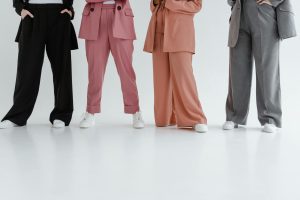
Exploring the Psychology Behind Why We Wear Certain Clothes
Have you ever wondered why we wear certain clothes? Why we choose one outfit over another? While practical reasons such as weather and functionality play a role in our clothing choices, there is often a deeper psychological aspect at play. Our clothing is a form of self-expression and can reveal a lot about our personality, beliefs, and emotions. In this article, we will delve into the psychology behind why we wear certain clothes and how it affects us on a deeper level.
The Power of First Impressions
From the moment we meet someone, we are subconsciously forming impressions and judgements based on their appearance. Our clothing is a significant factor in this process. Studies have shown that within the first few seconds of meeting someone, we have already formed a perception of their personality, status, and trustworthiness solely based on their appearance. This is known as the “halo effect” where one positive characteristic influences our perception of the person as a whole.
For instance, a person dressed in a sharp suit may be seen as confident, successful, and professional, while someone in casual attire may be perceived as laid-back and approachable. This initial judgement can impact the way we interact with that person and ultimately affect the outcome of our relationship with them.
The Role of Culture and Social Norms
The clothes we wear not only reflect our personality but also the societal and cultural norms we conform to. For instance, in some cultures, wearing revealing clothing may be frowned upon and seen as inappropriate, while in others, it may be the norm. Our clothing can also signify our social status, with designer labels and expensive brands being associated with wealth and privilege.
Social norms also dictate what is considered appropriate for different occasions. We wear formal attire to work, athletic wear to the gym, and party clothes to social events. These dress codes reflect the expectations and standards of the environment we are in and influence our choices. Going against these norms can lead to feelings of discomfort and possibly ostracism.
The Emotional Connection to Clothing
Beyond practicality and societal norms, our clothing also holds a deep emotional connection. We use it to express our individuality, boost our self-esteem, and evoke emotions. This is especially true for sentimental pieces, such as a cherished family heirloom or an item of clothing worn on a special occasion.
Moreover, we may associate certain pieces of clothing with specific people, memories, or experiences, making them more meaningful to us. For example, a sweater given to us by a loved one may provide a sense of comfort and security, while a dress worn during a significant event may evoke feelings of happiness and nostalgia whenever we wear it.
Physical and Psychological Effects of Clothing
As we have established, our clothing has a significant impact on our emotions and self-perception, but it also has physical effects on our bodies. Studies have shown that what we wear can affect our physiology, including heart rate, blood pressure, and hormone levels. For instance, wearing tight and restrictive clothing can increase our stress levels, while wearing comfortable and loose-fitting clothes can make us feel more at ease.
Furthermore, the colors we wear can also influence our mood and behavior. For instance, red is associated with passion and power, while blue is linked to calmness and productivity. This is why retailers carefully select certain color schemes to create a specific atmosphere in their stores.
In Conclusion
There is no doubt that our clothing choices go beyond just covering our bodies and serve as a powerful means of self-expression. It is a reflection of our personality, culture, emotions, and can affect our relationships, mood, and even our physical well-being. The next time you choose an outfit, consider the psychology behind why you are drawn to a particular style or color, and you may discover a deeper understanding of yourself and others.